

Pictures: FZI
The Moon Mission within Reach
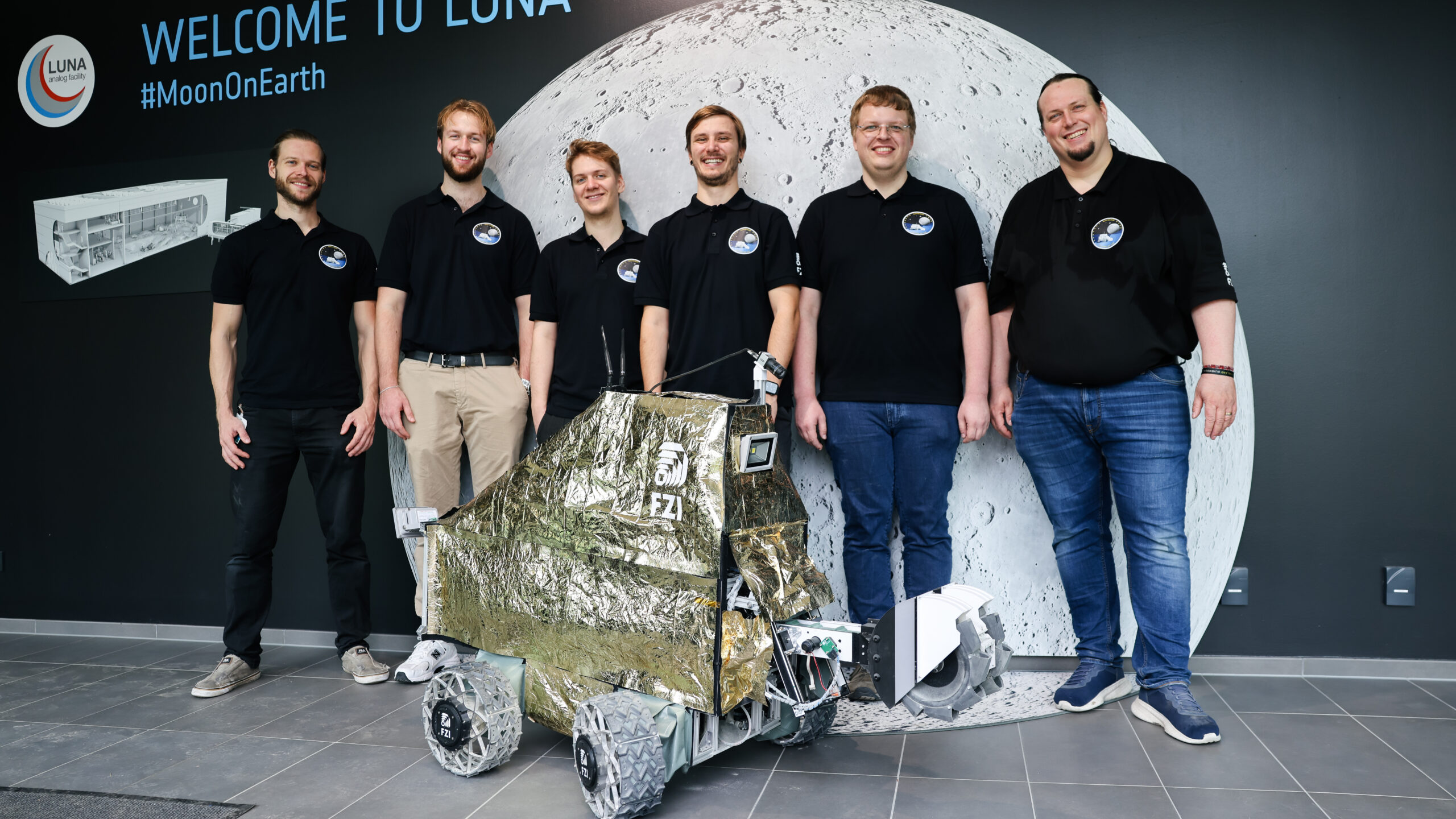
FZI robotics team at the second international Space Resources Challenge
Research focus: Applied Artificial Intelligence
“It is the 2040s. Operations to sustain a long-term human presence on the Moon’s surface using lunar resources have begun.” This may sound like the beginning of a science fiction novel. Still, it was in fact the start of the mission for the robotics team from the FZI Research Center for Information Technology in Karlsruhe at this year’s ‘Space Resources’ competition, organized by the European Space Agency (ESA). Seven team members were present on site.
Following its victory in the first ESA ESRIC Space Resources Challenge three years ago, the FZI once again competed against other international teams. This time, the task was to collect lunar regolith – loose rock material from the moon’s surface – and prepare it for oxygen production by separating it into particles of different sizes. The goal was to create a material that is optimally suited for molten salt electrolysis. In the competition, enough regolith had to be prepared to provide enough oxygen to sustain eight astronauts during a 30-day mission at the Moon’s South Pole.
“The main goal of the competition is to collect regolith and prepare it for further processing. The team must produce a feedstock with a particle size distribution specifically tailored to optimise the molten salt electrolysis process, an oxygen extraction method. The goal is to provide enough oxygen to sustain eight astronauts during a 30-day mission at the Moon’s South Pole.”
Source: ESA
Robots extract artificial Moon rock under special conditions and prepare it for use.
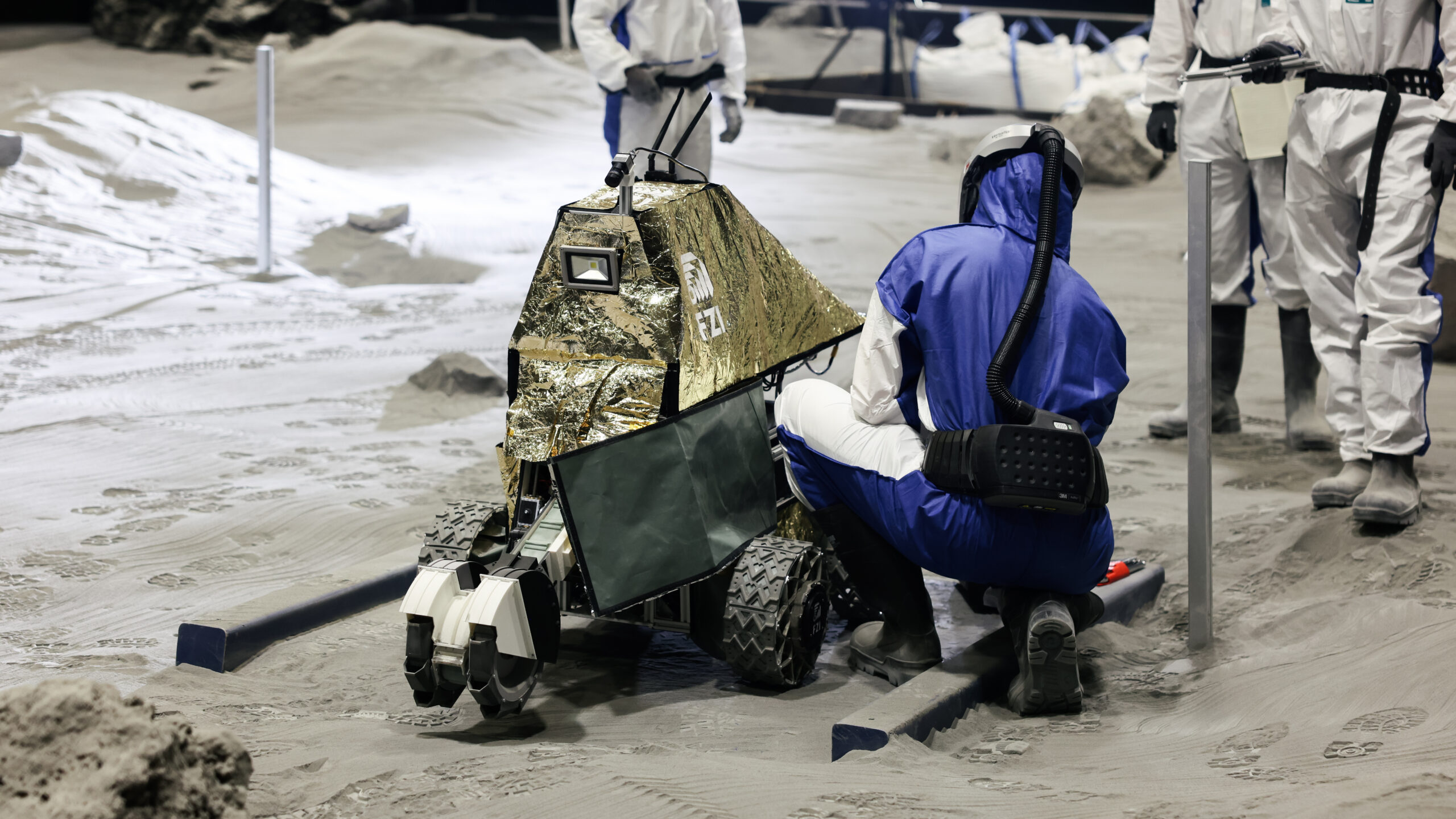
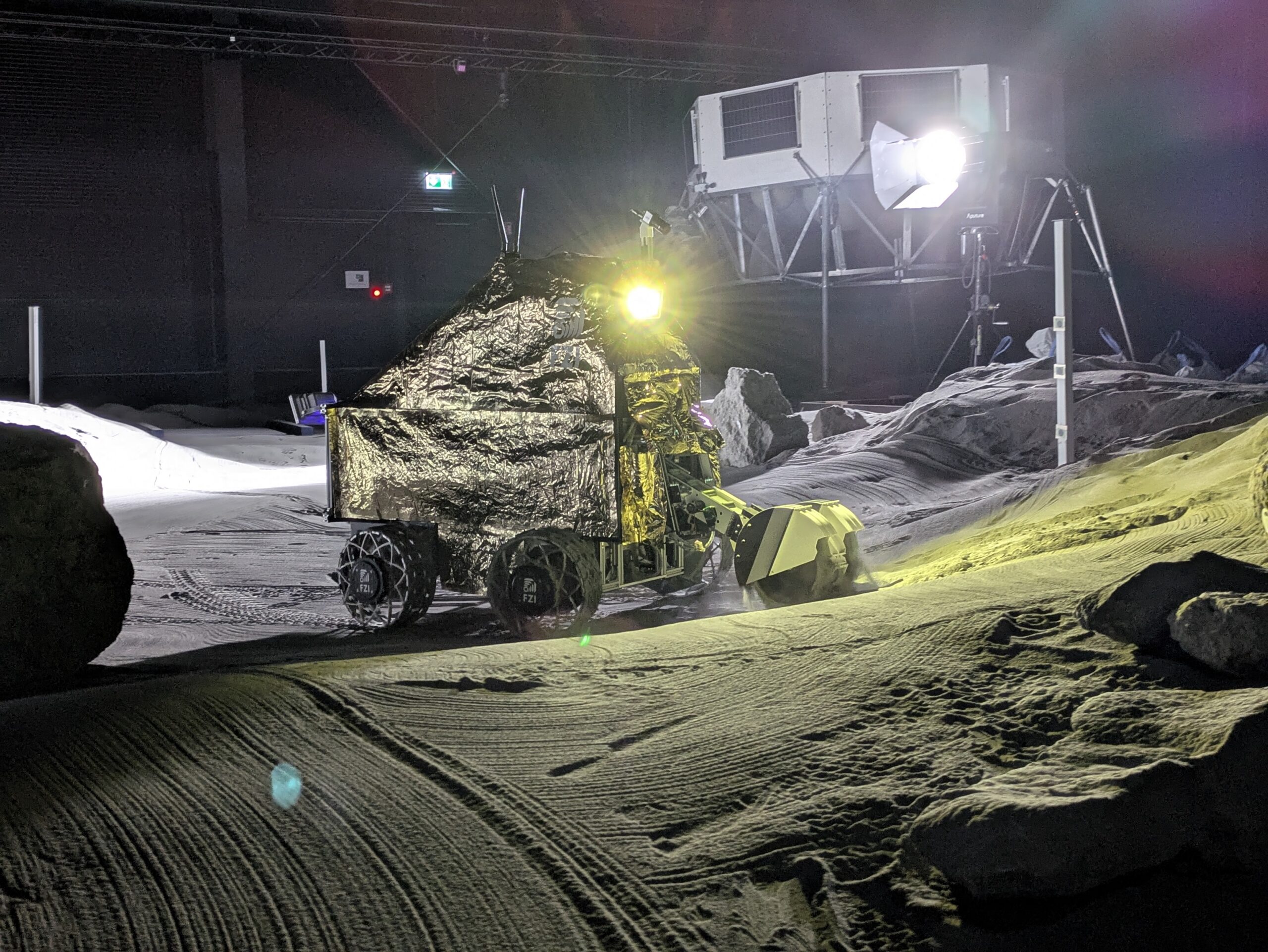
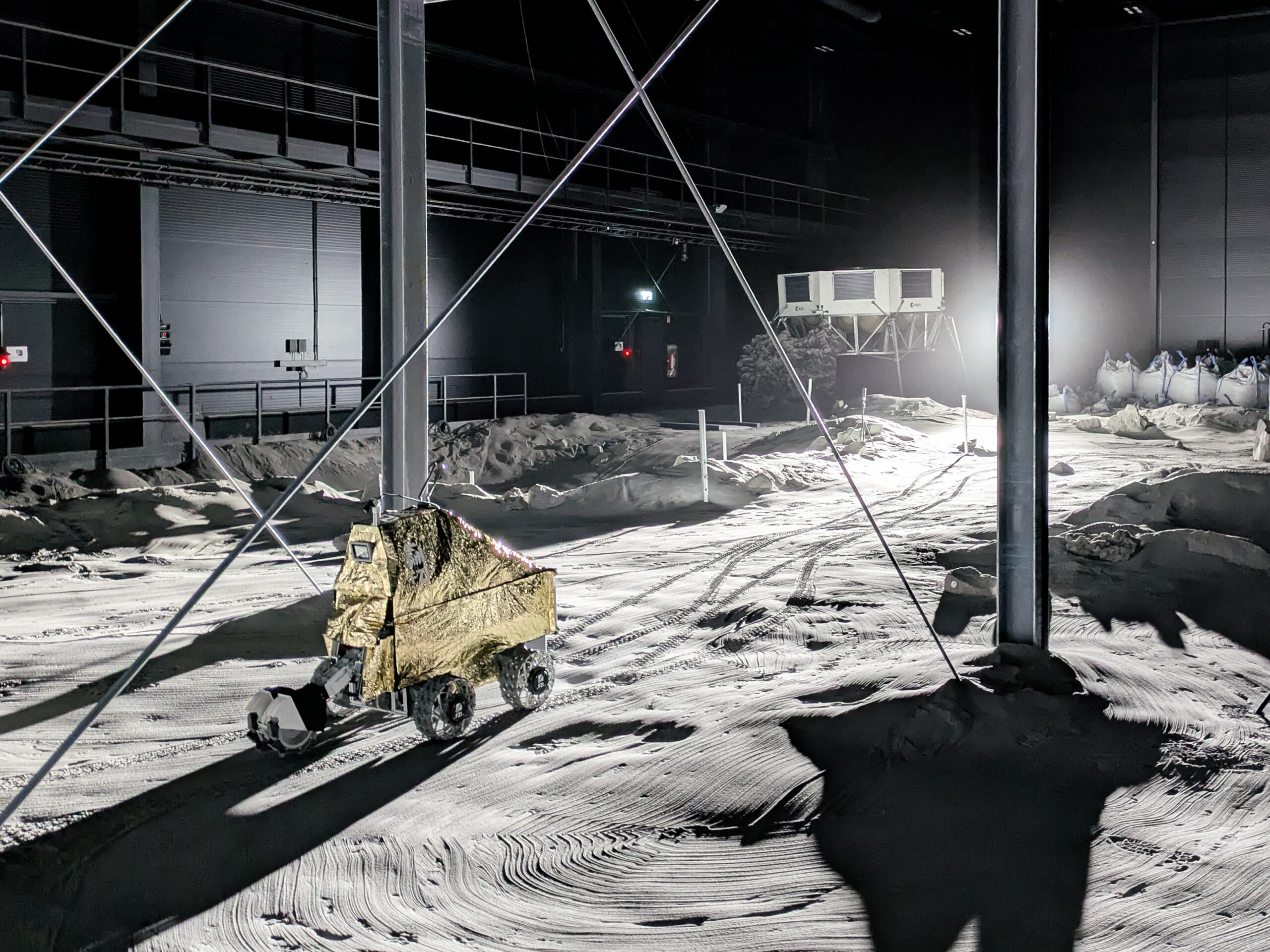
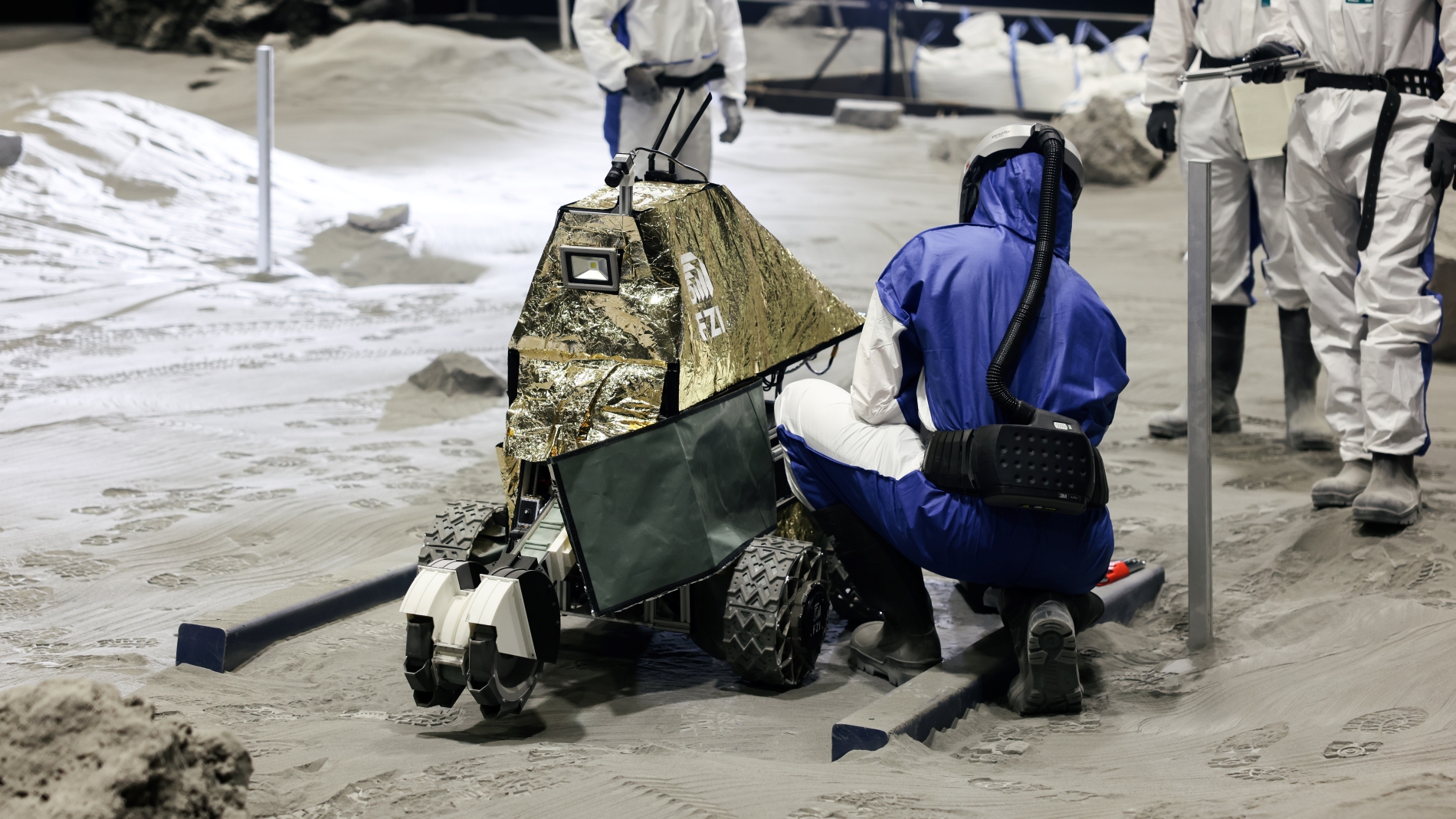
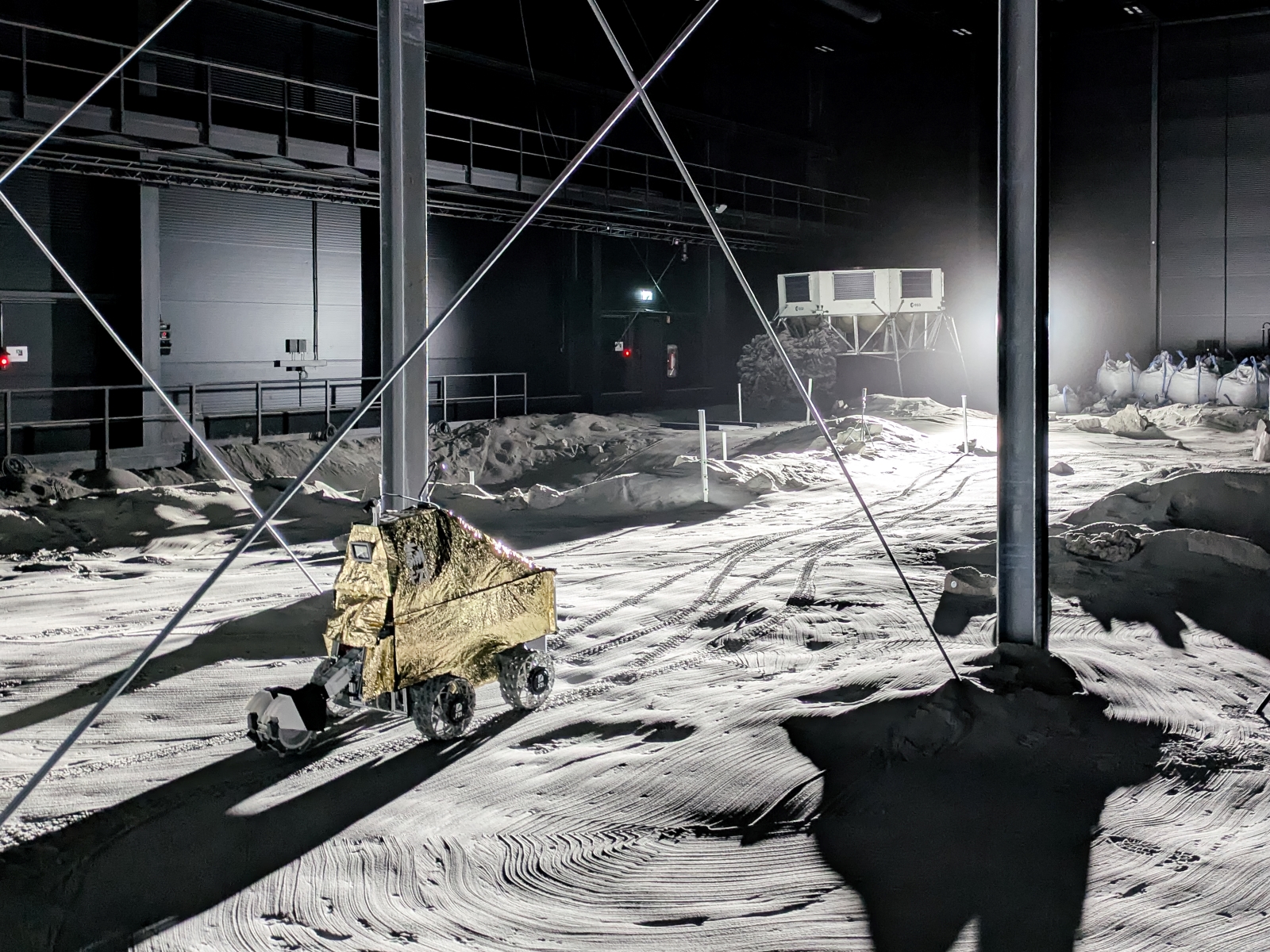
It wasn’t just ESA’s assignment to the eight finalist teams that seemed futuristic: The field test for the autonomous robots took place in mid-October at the “LUNA” lunar center at the DLR site in Cologne. Future astronauts are being prepared for lunar missions at the newly opened facility. Covering an area of over 700 m², the facility simulates the challenging conditions on the Moon with realistic lighting conditions and the special properties of regolith. The lunar surface was recreated in the hall using around 900 tons of regolith simulant. This consists of fine basalt dust, the grain size and composition of which were specially developed for the facility. The properties of the dust are very similar to those of the original lunar regolith.
“Boulders, hills, and craters give LUNA’s terrain a realistic appearance. Coupled with an adjustable ramp, they serve to test the capabilities of rovers and landers as they are optimized for future missions in the challenging lunar environment.”
Pictures: FZI
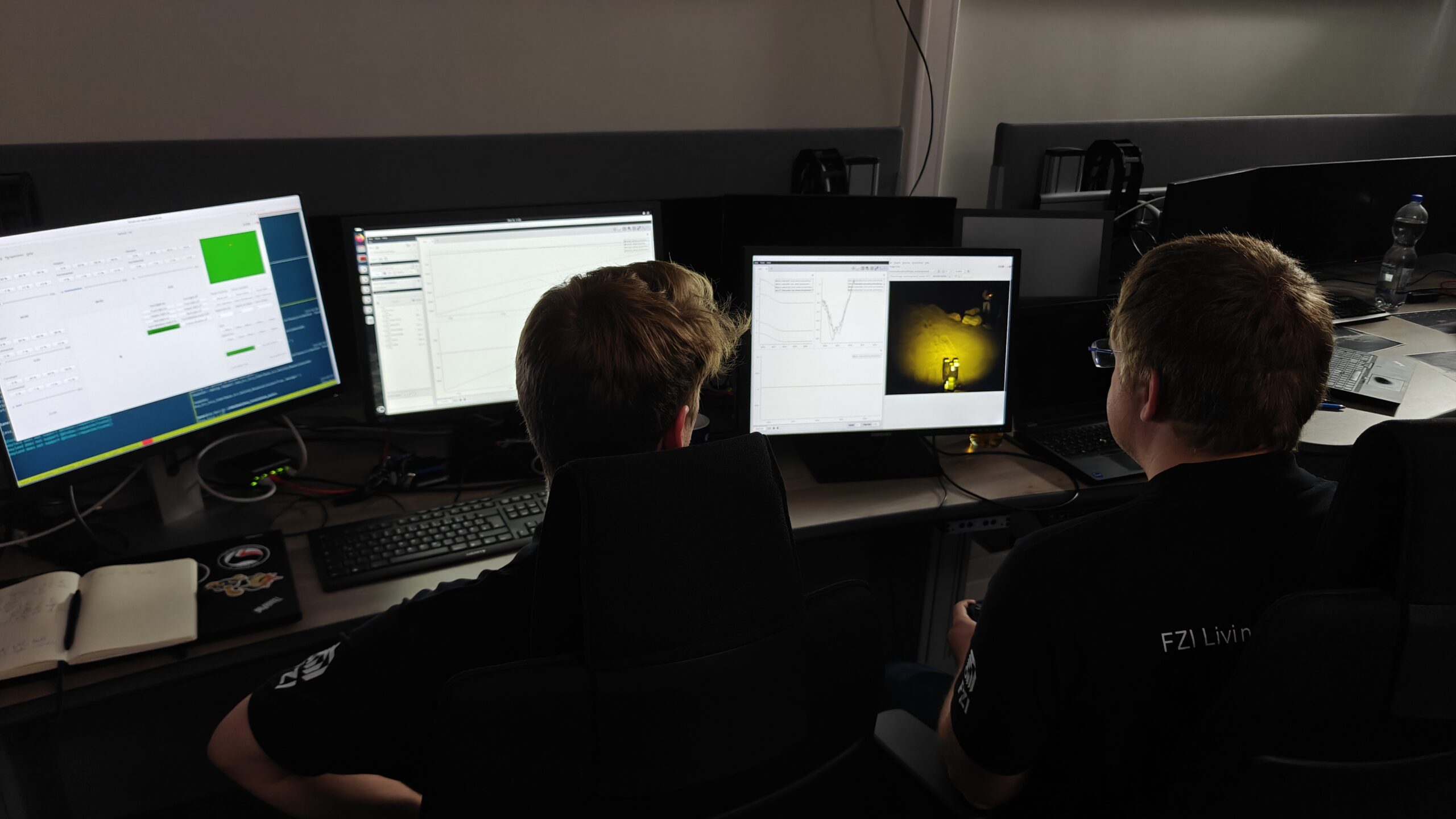
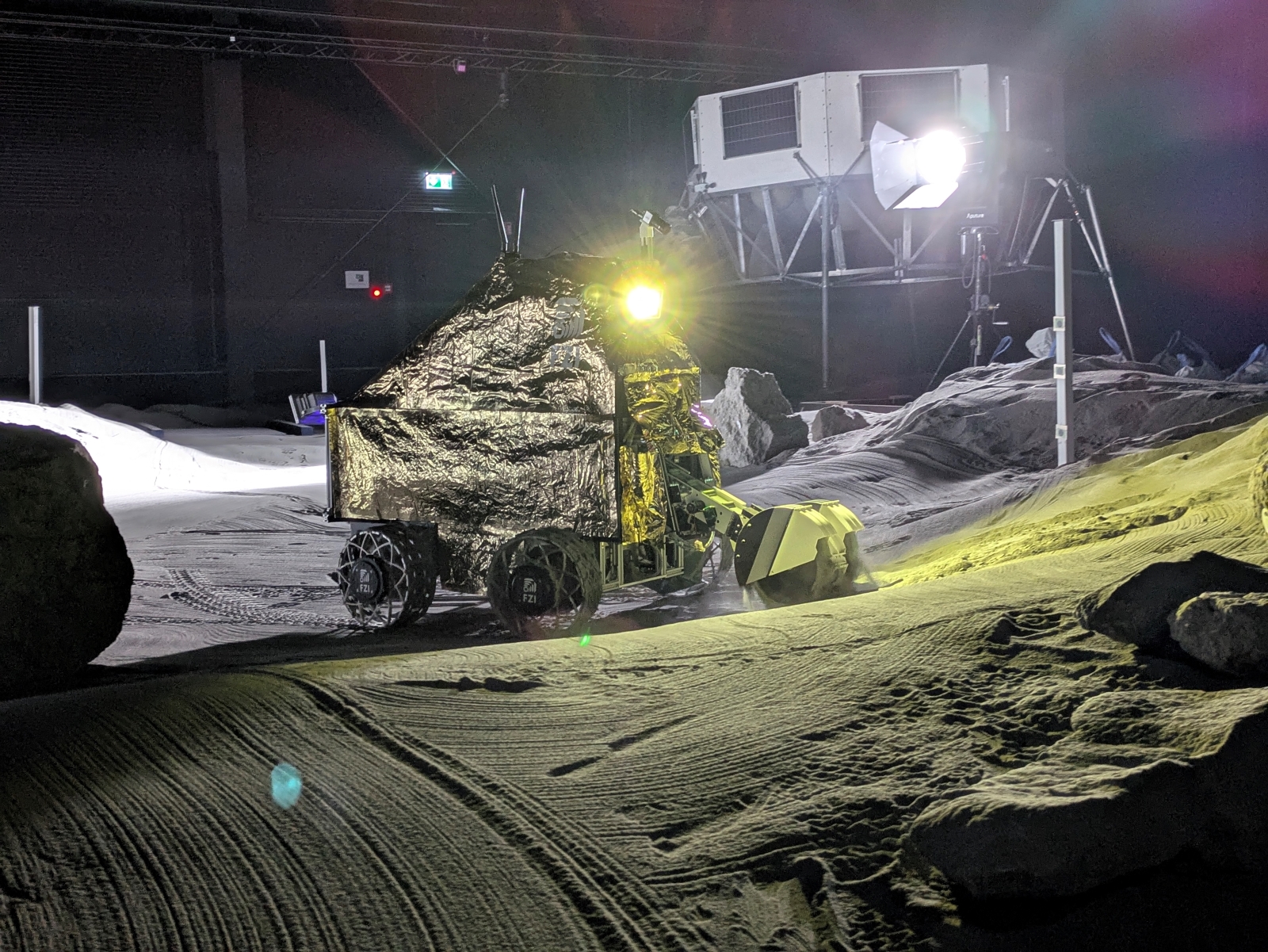
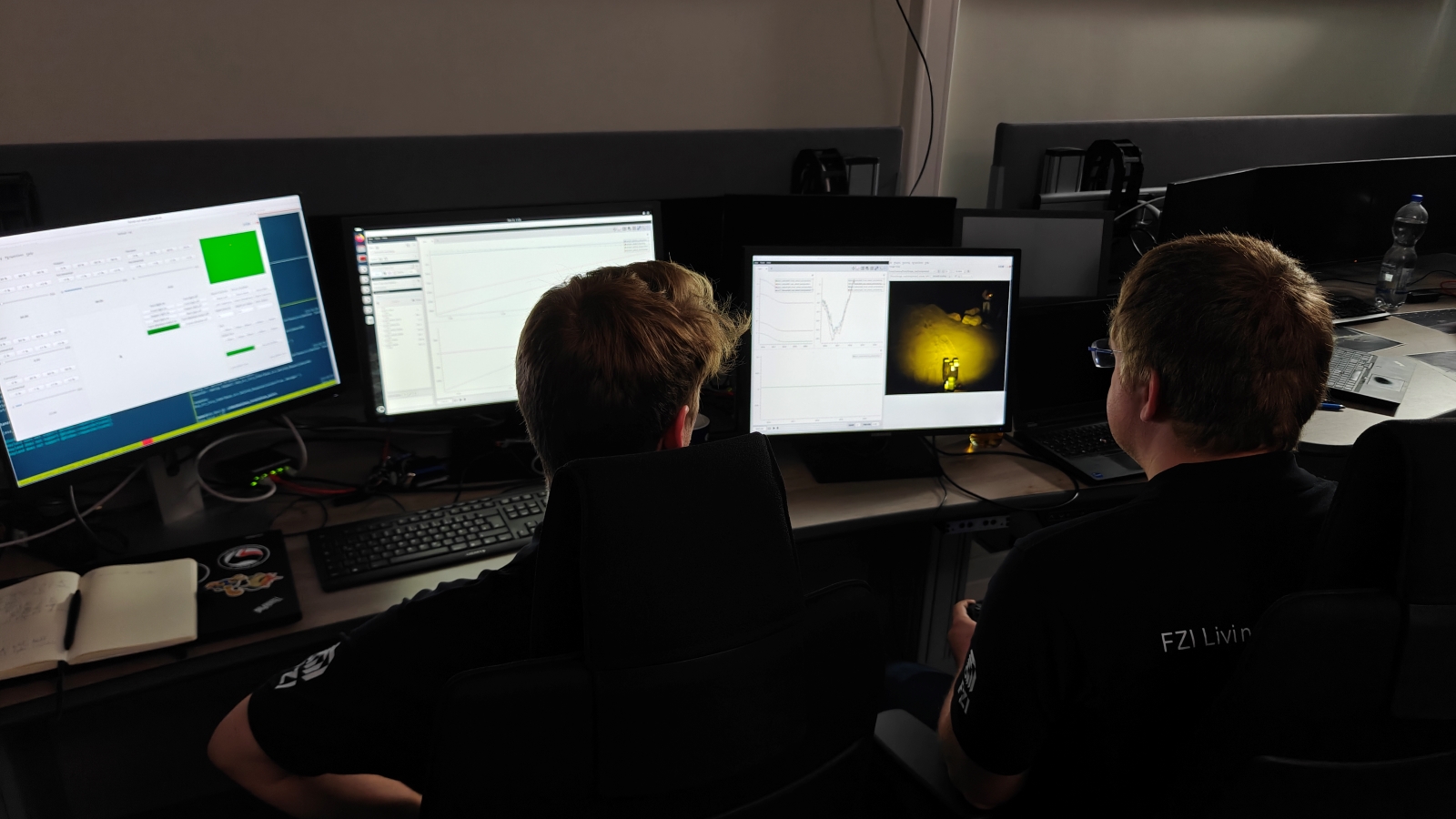
“The dust was actually a major challenge for the robots and our technology,” says Dr. Georg Heppner, FZI Department Head and leader of the FZI Challenge Team DUST (Distributed Unit for Sorting and Transport). “Regolith is very fine and causes mechanical parts to clog and wear out quickly. We therefore had to continuously monitor the material transport and the function of all rover components from the control room and intervene accordingly in the event of errors.”
The mining of lunar rock is comparable to mining on Earth, where soil, rock, or other materials are removed to obtain valuable raw materials. Suitable methods must be developed for the special conditions on the Moon to loosen, move, and make the material available efficiently. Processing encompasses all steps that increase the economic or practical value of a raw material by removing unwanted components. On Earth, this is done by sorting, crushing, or cleaning ores, for example. In the context of in-situ resource utilization (ISRU) in space, processing refers to the direct on-site processing of extracted lunar regolith – for instance, by separating it according to particle size or enriching specific minerals. This produces a material that is better suited for the next processing step, such as extracting oxygen, water, or building materials for future lunar missions.
“Working in space research is very challenging because the conditions in space are truly unique and the conditions on Earth in the laboratory are so different. Tests such as those carried out at the LUNA Moon Center make the whole thing tangible and incredibly motivating because they create a sense of immediacy. For humans to have a permanent presence on other celestial bodies, many different disciplines have to work together, and it’s great to be able to contribute to that.”
Niklas Spielbauer, Research Scientist at the FZI and DUST team leader
FZI robotics team delivered a customized solution
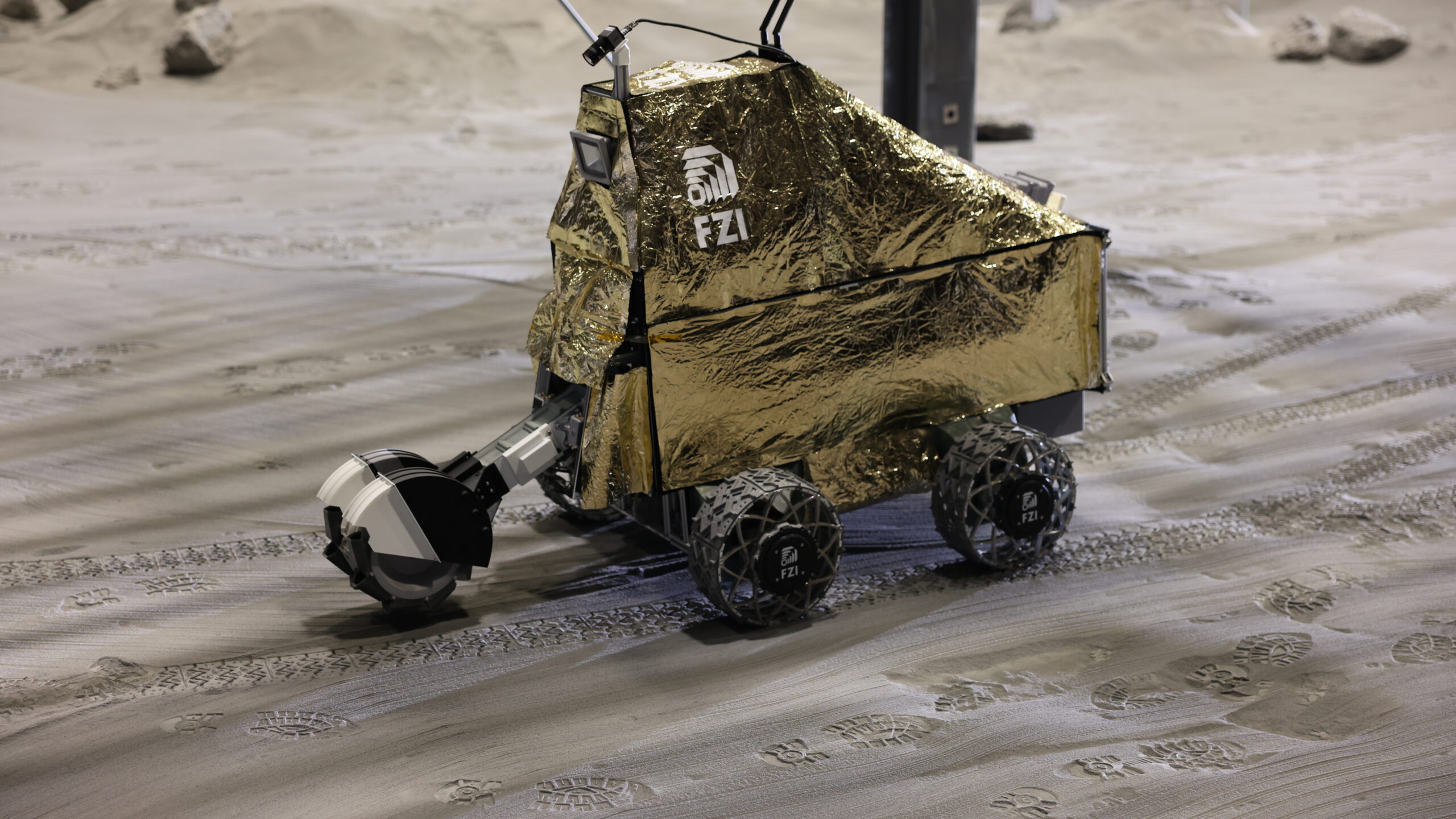
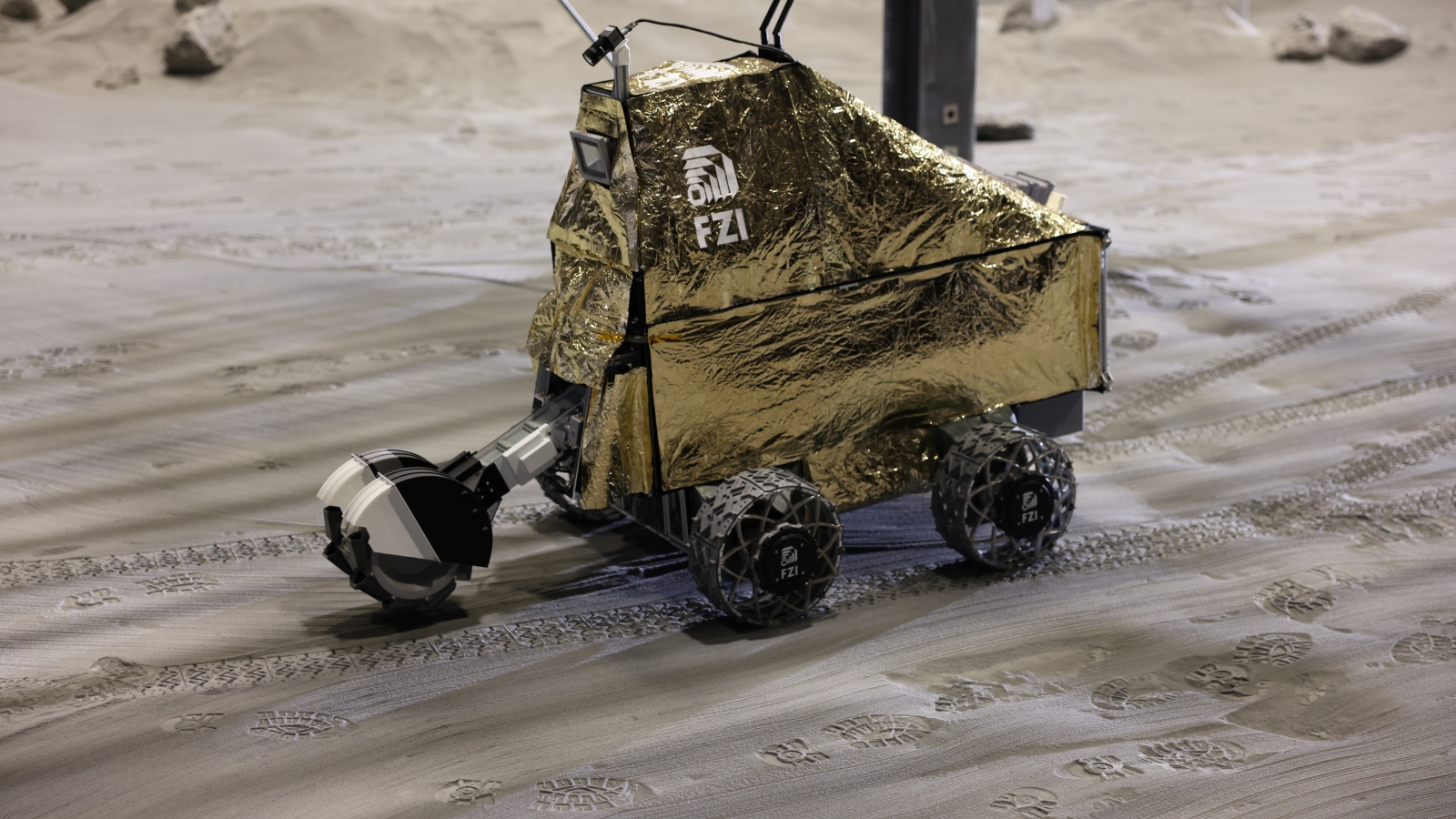
The FZI team utilized the Modular DUST Rover, a platform featuring four wheels and modular superstructures, which was specifically designed for the challenge. The team benefited from the fact that, in addition to the fully equipped FZI Living Lab Service Robotics, the FZI also has its own metal workshop for robotic prototypes. The challenge required a robot that could process at least 15 kg of moon rock, weighed a maximum of 60 kg, and generated as little dust as possible during operation. The special feature of the FZI solution was that all the necessary capabilities were combined directly in the robot: mining and screening were carried out without any detours. In contrast, other teams had to drive their robots to a separate station to screen the rock. The FZI team’s expertise also came from a single source: rapid prototyping, the robot, and in-house modular software. Especially in teleoperation, the FZI relies heavily on the open-source framework Robot Operating System (ROS) . The FZI is engaged in the field of open-source software (OSS) through various publications and is a member of the ROS Industrial Consortium Europe.
“At the FZI, we have been conducting research into robotics for around 40 years, focusing primarily on intelligent mobile systems and walking robots. Recently, we have been focusing on autonomous functions for space travel and safety-critical, hostile environments. The developments are tested in real-life analog scenarios – for example, in the desert, a nuclear power plant, or, as in this challenge, in a lunar test environment,“ says Dr.-Ing. Georg Heppner.
Before the final round, the team was provided with aerial photographs and 3D maps of the test site. These were used to identify the most promising mining areas and plan safe routes between the starting area and the destination points. During the challenge, on-board cameras were used for orientation to ensure that the planned routes were followed precisely.
Opportunity for a real Moon mission and a €500,000 development contract for a feasibility study
All eight teams participated in the field test from October 13 to 17, 2025, and subsequently submitted their concepts for further development of the project to ESA by the end of the month. After that, it was time to wait for the winners to be announced. Who would win the €500,000 development contract for a feasibility study with ESA? And which team performed best in the beneficiation category? This process involves improving the economic value of an ore by removing gangue minerals to produce a higher-grade product. The winning team is being rewarded with up to €250,000 by the Luxembourg Space Agency (LSA) and ESRIC. “The field test was incredibly exciting for us, of course. We finished preparing the software, hardware, and mechanics right on time, and then our rover was ready to go. And then, of course, you want to be able to achieve what you set out to do,” recalls Niklas Spielbauer. “We didn’t know how the other competitors were doing either. We were hardly allowed to talk to each other on site, and each of the finalists’ approaches had its advantages and disadvantages.”
Yesterday, the eagerly awaited result was announced: the FZI team did not win the competition this time. “We congratulate the BREMEN team on their great performance! We will take the experience from the challenge with us into our application research and look forward to competing against such top teams again in what we hope will be the next challenge! A big thank you to the entire DUST team at the FZI, as well as to the other finalists. We have all shown how strong European robotics research is,” said Dr. Georg Heppner.
What happens next? Even without a follow-up project, development of the rover continues. On the one hand, this is to learn from the challenges that arose and analyze them scientifically, and on the other hand, to create a flexible base for future space projects and their development.
About the FZI
The FZI Research Center for Information Technology, headquartered in Karlsruhe with a branch office in Berlin, is a non-profit institution dedicated to research in information technology applications and technology transfer. It delivers the latest scientific findings in information technology to companies and public institutions, and qualifies individuals for academic and business careers, as well as the leap into self-employment. Supervised by professors from various faculties, the research groups at the FZI develop interdisciplinary concepts, software, hardware, and system solutions for their clients and implement the solutions found as prototypes. The FZI House of Living Labs offers a distinctive research environment for applied research. The FZI is an innovation partner of the Karlsruhe Institute of Technology (KIT) and a strategic partner of the German Informatics Society (GI).

Download press information (pdf):
Download media:
Please click on the medium to download.
Video accompanying press release:
Further downloads & links: