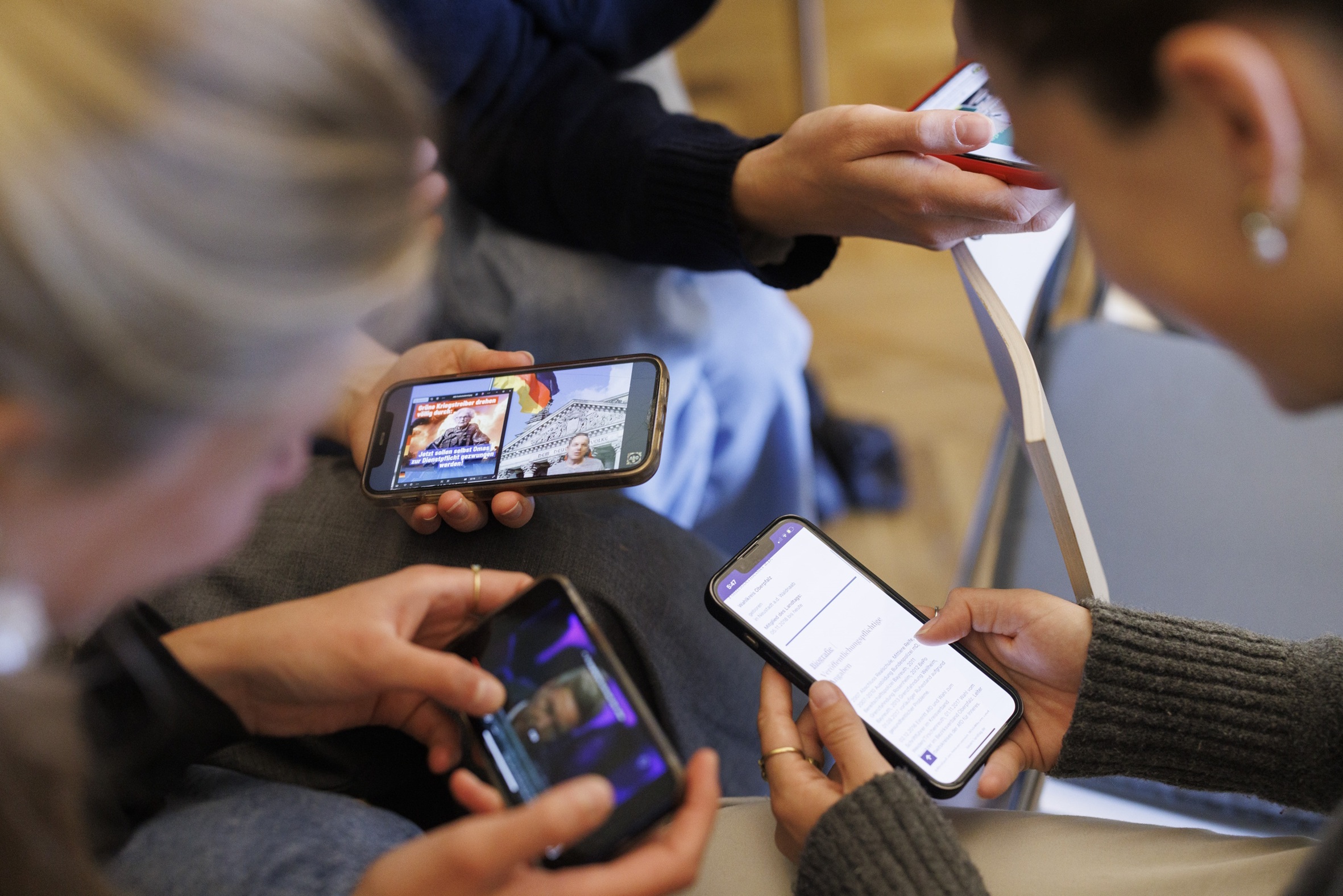

The project's goal is to develop an AI-assisted system capable of detecting, analyzing, and preparing disinformation for fact-checking across languages. Existing AI models and analytical approaches primarily focus on English-language content and often struggle to adequately capture culturally coded narratives. KuKI addresses this research gap by developing a culturalization-sensitive language model that incorporates linguistic nuances, historical references, and societal contexts into the analysis.
The project combines machine learning methods with approaches from social science research and journalism. A key component is the investigation of cross-platform and cross-linguistic disinformation dynamics on social media networks and messaging services such as Telegram, YouTube, and TikTok. To support this work, the Center for Monitoring, Analysis and Strategy (CeMAS) is expanding its existing monitoring systems to include Russian- and Turkish-language communication spaces, enabling the systematic analysis of narrative patterns, actor networks, and dissemination mechanisms.
The technologies developed within the project will be integrated into the CORRECTIV.Faktenforum. This platform enables citizens to collaboratively investigate potential misinformation together with professional journalists. Through automated translation and analysis functions, fact-checking will be supported across multiple languages, facilitating exchange and collaboration between different language communities.
Another key focus of the project is the participatory involvement of the communities concerned. Representatives of Russian- and Turkish-speaking publics will be actively engaged in the development and evaluation of the systems to ensure that cultural perspectives are considered from an early stage and that the resulting methods are socially relevant and broadly applicable.
KuKI follows an open science approach: methodological foundations, datasets, and analytical procedures will be documented transparently and made accessible wherever possible to support transferability to additional language communities and application domains. The project aims to establish new scientific and technological foundations for addressing disinformation in an increasingly multilingual digital society.
Featured image: CORRECTIV, Ivo Mayr
FZI contributes its expertise in digital democracy, platform research, and AI-supported disinformation detection. This includes work on the analysis of online discourses, the evaluation of platform mechanisms, and the development of formats for societal dialogue and knowledge transfer.
Within the project, FZI is primarily responsible for the requirements analysis for platform development, the expansion of a taxonomy for disinformation classification toward multilingual and culturalization-sensitive analytical approaches, and the technical implementation of a media stream annotation tool. In addition, FZI supports the development of the cross-lingual analysis pipeline, the creation of a disinformation knowledge graph, and the design of an alerting system. FZI also contributes to empirical evaluation, methodological validation, and statistical data analysis.

AI from research to practice: We promote applied AI for business and small and medium-sized enterprises, integrating technology with law and ethics.
Drawing on our expertise in applied AI, computational social science, and medical technology, we develop solutions for the political, business, and civil sectors.