

Autonomous Driving in PT: What Do We Really Need?
FZI Keynote at the 2026 VDV Annual Conference in Karlsruhe
Research Focus: Mobility and Logistics
Accelerating Transformation – Shaping Innovation: Under this motto, the VDV Annual Conference will take place in Karlsruhe from June 9 to 11, 2026, in cooperation with Verkehrsbetriebe Karlsruhe GmbH (VBK). As one of the most important mobility conferences in Germany, the event attracts around 900 participants annually from the fields of politics, business, academia, and the transportation industry. In the forum Autonomous Driving in Public Transport | Autonomous Driving in Reality Check, FZI Executive Director and Board Member Prof. Dr.-Ing. J. Marius Zöllner delivered four clear messages to participants in his keynote speech titled “Straight Talk: Autonomous Driving in Public Transport – What Do We Really Need?”
1️⃣ Put it all together and get started
We have the technologies, but we need to bring them together and orchestrate them. The Ecosystem Mobility 4.0 initiative offers a great opportunity for this, and we should get heavily involved. Because we need more coopetition, open source/data for the AD stack, and innovation partnerships between manufacturers and operators.
2️⃣ More technology – specifically AI
Traditional approaches reach their limits when dealing with complex real-world driving situations. We need an ODD extension through world models, physical AI, and agent-based AI, as well as credible simulation for validation and verification. Technological sovereignty is a must in this context.
3️⃣ More courage
We must move away from the notion that a validated, robust system is available off the shelf; instead, we must move forward with a problem-conscious willingness to take risks—from manufacturers to operators to policymakers. And we must do so with a clear objective and a long-term commitment from all stakeholders to develop a roadmap for autonomous driving.
4️⃣ Model regions
Pre-series and regular operating areas are needed, as well as strong collaboration in model regions; otherwise, we risk another wave of small-scale pilot projects. Model regions must be conceived on a cross-border basis and also extended to include rail transport.
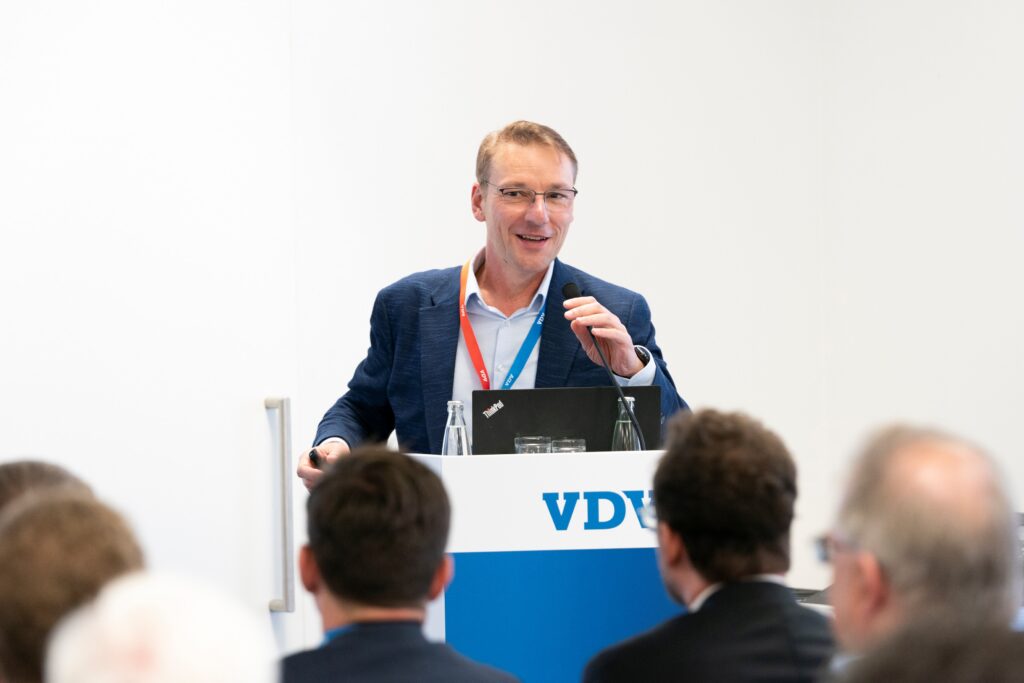
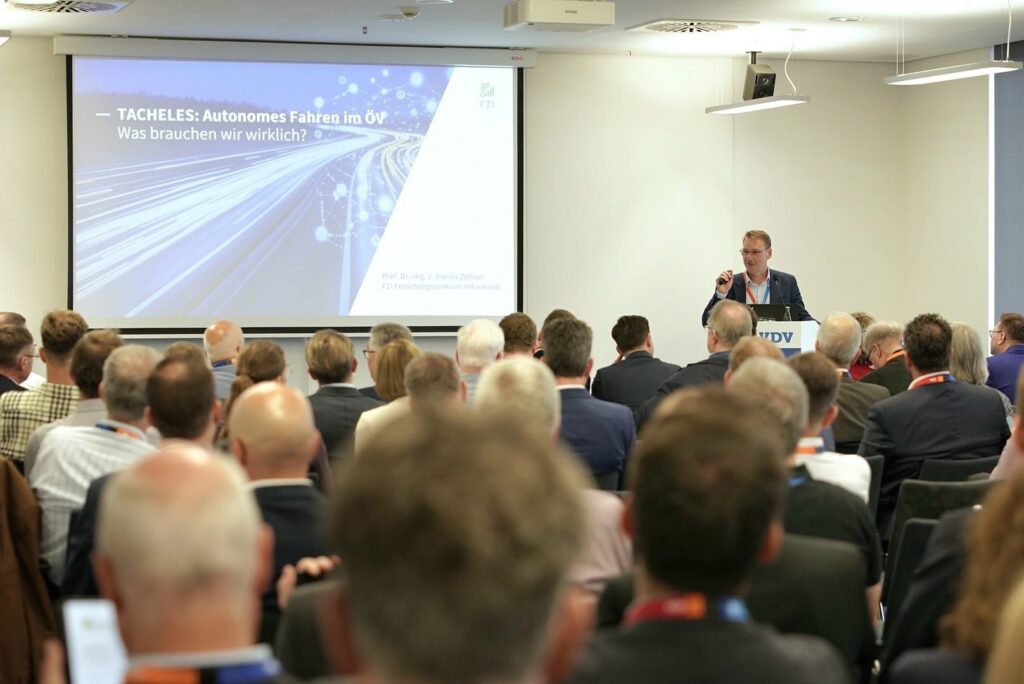
The FZI has over 40 years of experience conducting research on mobility. From autonomous shuttles to intelligent logistics and software-defined vehicles, the research institute is using IT to shape tomorrow’s connected, safe and sustainable mobility and logistics. By using simulations, optimized prototyping processes, open source and open data, FZI researchers are bringing innovations to roads and railways more quickly. In addition to expertise from numerous research projects, the keynote presentation also incorporated current findings from TACHELES. Under the heading ‘AVF-Nebel lichten: Branchenwirkung und technologische Souveränität als Schlüssel zum Erfolg?’ (Clearing the AVF Fog: Industry Impact and Technological Sovereignty as the Key to Success), the TACHELES conference organized by the FZI Research Center for Information Technology took place for the fourth time on 7 and 8 May 2026.
About the 2026 VDV Annual Conference
The 2026 VDV Annual Conference will focus on the key factors for the industry’s transformation. Public transit and rail need fast, scalable solutions – ranging from new technologies and modern infrastructure to new financing approaches and up-to-date regulations.
Like no other region, Karlsruhe stands for progress, technology, and connectivity in public transportation: from tram-trains to digitalized traffic management systems and real-world laboratories for autonomous mobility, such as the Test Area Autonomous Driving Baden-Württemberg.
About the VDV
The VDV, short for Verband Deutscher Verkehrsunternehmen (Association of German Transport Companies), is the trade association for public transportation (local public transit and rail freight). It represents its members’ interests in the political, business, research, and public spheres.