
State Joins in Shaping Europe's Test Areas for Autonomous Driving
Baden-Württemberg joins EU initiative for cross-border test areas
Baden-Württemberg is participating in a new European Union initiative for cross-border test areas for autonomous driving and is actively contributing its experience as a pioneer in this cutting-edge field.
At the European Union’s Transport Council, more than ten member states signed a joint declaration of intent to coordinate better the development and deployment of autonomous vehicles across Europe. The initiative stems from the “Industrial Action Plan for the European Automotive Sector” (PDF), through which the European Commission aims to strengthen the competitiveness and innovative capacity of the European automotive industry.
Key technology for the future
State Minister of Transportation Nicole Razavi emphasized: “Autonomous driving is a key technology for the mobility of the future. Software- and AI-defined vehicles will significantly shape the automotive industry’s development in the coming years. Baden-Württemberg is at the forefront of this field: With our strong economy, our world-leading companies, and our excellent research landscape, we are exceptionally well-positioned. “If we successfully develop and implement these technologies, we will secure the future viability of our domestic automotive industry while simultaneously strengthening Europe’s competitiveness.”
Minister Razavi went on to emphasize that Baden-Württemberg has a strong partner in France and the Grand Est region: “With cross-border test areas for autonomous and connected driving, we can expand the close German-French cooperation to a key future field of mobility. Baden-Württemberg and the Grand Est region have excellent conditions for jointly testing new technologies in real-world settings and helping shape European standards. Our goal is to advance innovations where they directly benefit people: through improved mobility, efficient transportation services, and a strong European industry.” Cross-border test areas could make an important contribution to this by bringing innovations into use more quickly, strengthening Europe’s technological competitiveness, and increasing Europe’s strategic sovereignty in key technologies.
Strengthening an important field for the future together
The initiative aims to enable cross-border use cases for autonomous driving, coordinate approval and registration procedures more effectively, and strengthen Europe’s competitiveness in this strategically important future field. To this end, two work streams will be established: one addressing regulatory issues and the harmonization of national frameworks, and the other focusing on the practical implementation of autonomous mobility services and the exchange of experiences in their planning, operation, and integration. Member states, regions, and the European Commission will work together to advance this initiative in the coming years.
Baden-Württemberg contributes practical experience and networking opportunities
Baden-Württemberg is playing an active role in the European initiative and is contributing its expertise, particularly in the second workstream. There, member states, regions, municipalities, and the European Commission are jointly developing the framework for deploying autonomous vehicles across borders and in regular service on Europe’s roads in the future. The focus is on key future issues such as planning, financing, procurement, integration into existing transportation systems, and the exchange of experiences from various projects among the participating stakeholders.
The insights gained from this process are to be directly incorporated into the further development of the European legal framework and pave the way for uniform standards across Europe. Leadership in this work stream lies with the member states, which are jointly creating the conditions for the widespread deployment of autonomous mobility solutions.
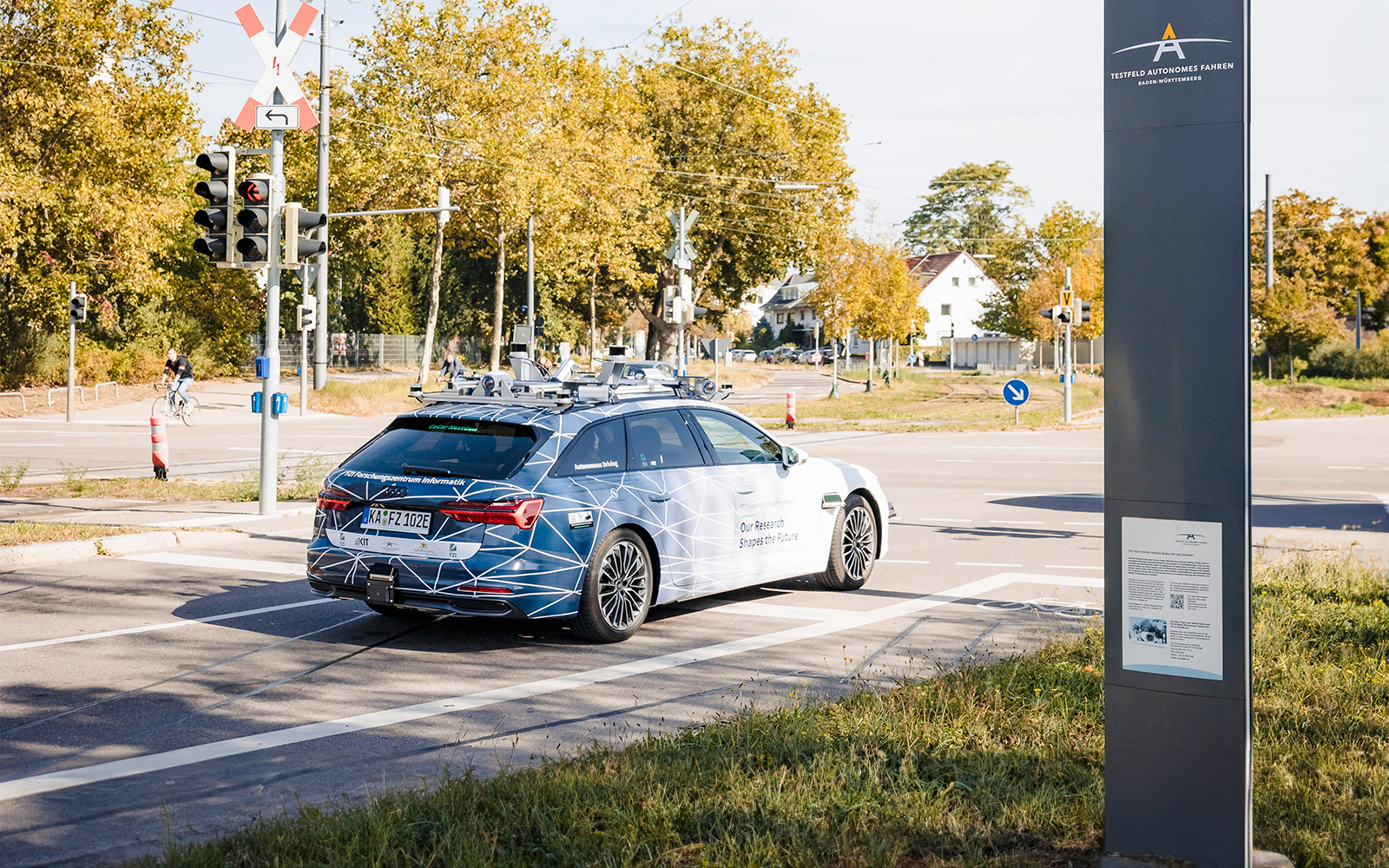
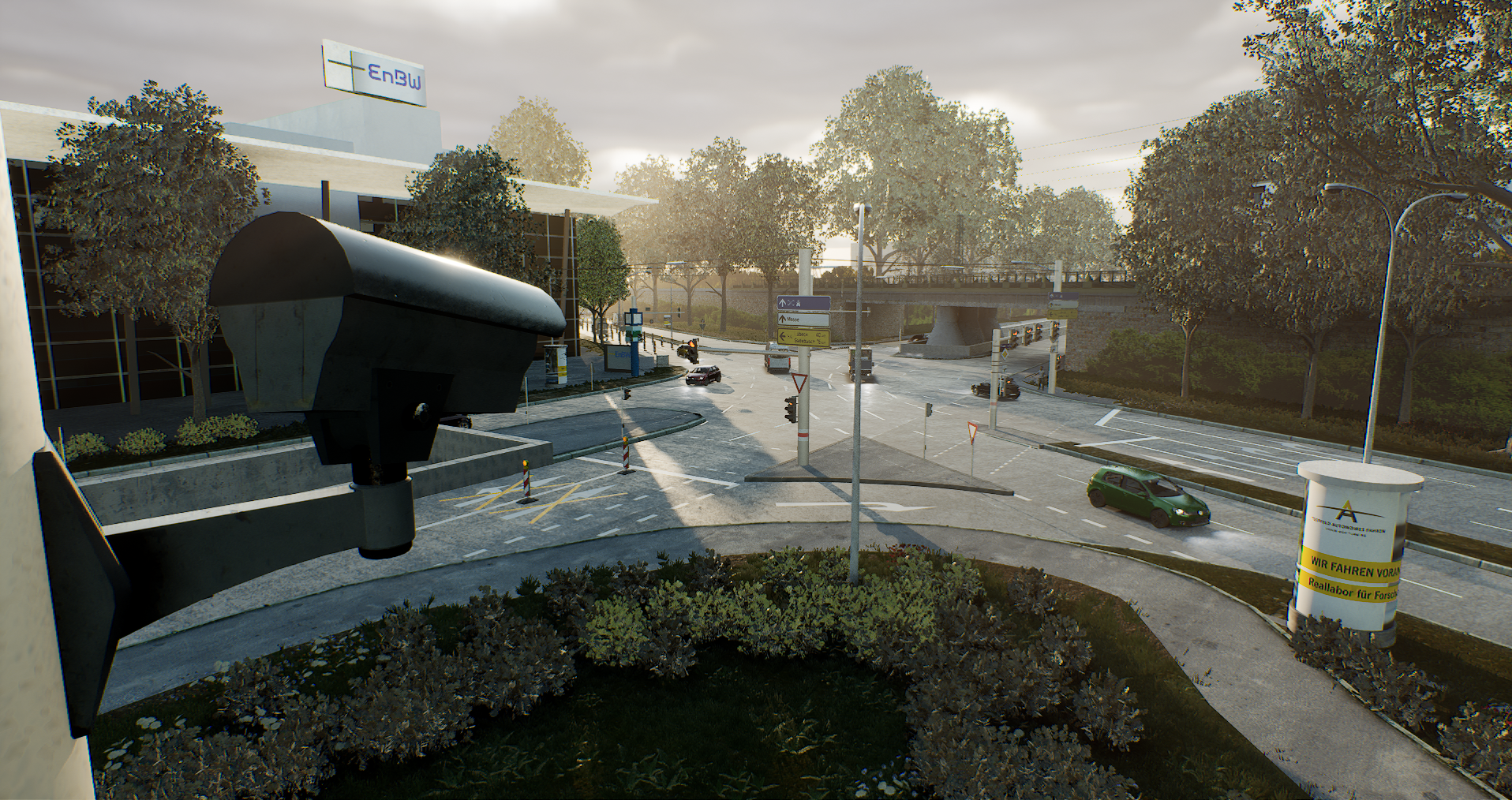
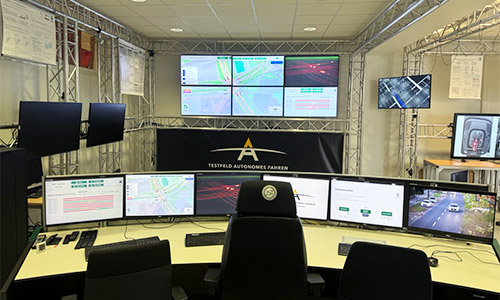
The European initiative builds on existing research and demonstration projects in the field of autonomous and connected driving. Baden-Württemberg will contribute its experience from the Test Area Autonomous Driving Baden-Württemberg in Karlsruhe, as well as from ongoing cross-border collaborations—including with the Grand Est region—to the further development of the initiative.
FZI supports the initiative through TAF BW
The FZI Research Center for Information Technology welcomes the European initiative and supports its goals, particularly by drawing on its experience as the scientific lead for the design, planning, and expansion of the Test Area Autonomous Driving Baden-Württemberg (TAF BW). There, the FZI works with partners to research and test technologies for automated and connected mobility under real-world traffic conditions.
“The initiative addresses precisely what will be crucial for the future of autonomous driving: cross-border testing, coordinated framework conditions, and the transfer to practical application,” said FZI Executive Director Prof. Dr.-Ing. J. Marius Zöllner. “With our expertise from the Test Area Autonomous Driving Baden-Württemberg, we are actively contributing to the development of European standards and safe mobility solutions—so that harmonized European, cross-border mobility can succeed.”
Signatories
According to the German Federal Ministry for Transport, the signatories include Germany (DE), Austria (AT), Belgium (BE), Cyprus (CY), the Czech Republic (CZ), Estonia (EE), Finland (FI), France (FR), Greece (GR), Croatia (HR), Hungary (HU), Ireland (IE), Italy (IT), Luxembourg (LU), the Netherlands (NL), Poland (PL), and Sweden (SE).
About the FZI
The FZI Research Center for Information Technology, with headquarters in Karlsruhe and a branch office in Berlin, is a non-profit institution for information technology application research and technology transfer. It delivers the latest scientific findings in information technology to companies and public institutions and qualifies individuals for academic and business careers or the leap into self-employment. Supervised by professors from various faculties, the research groups at the FZI develop interdisciplinary concepts, software, hardware and system solutions for their clients and implement the solutions found as prototypes. The FZI House of Living Labs provides a unique research environment for application research. The FZI is an innovation partner of the Karlsruhe Institute of Technology (KIT) and strategic partner of the German Informatics Society (GI).
This press release was issued by the State of Baden-Württemberg and has been supplemented with information regarding the role and activities of the FZI Research Center for Information Technology.
Download material & links:
Download media:
Click media for download.