
Projects
BoniKI
AI-based scoring system for plant-accurate, autonomous plant evaluation
Start: 05/2021
End: 04/2024
Automated plant evaluation with Artificial Intelligence (AI) and classical computer vision algorithms was supposed to increase sustainability, transparency, and efficiency in agriculture. The potentials of algorithms and neural networks were tested regarding opening up new potentials and relevant assessment parameters. They could enable a larger circle of users to determine protection and maintenance measures.
Role of the FZI
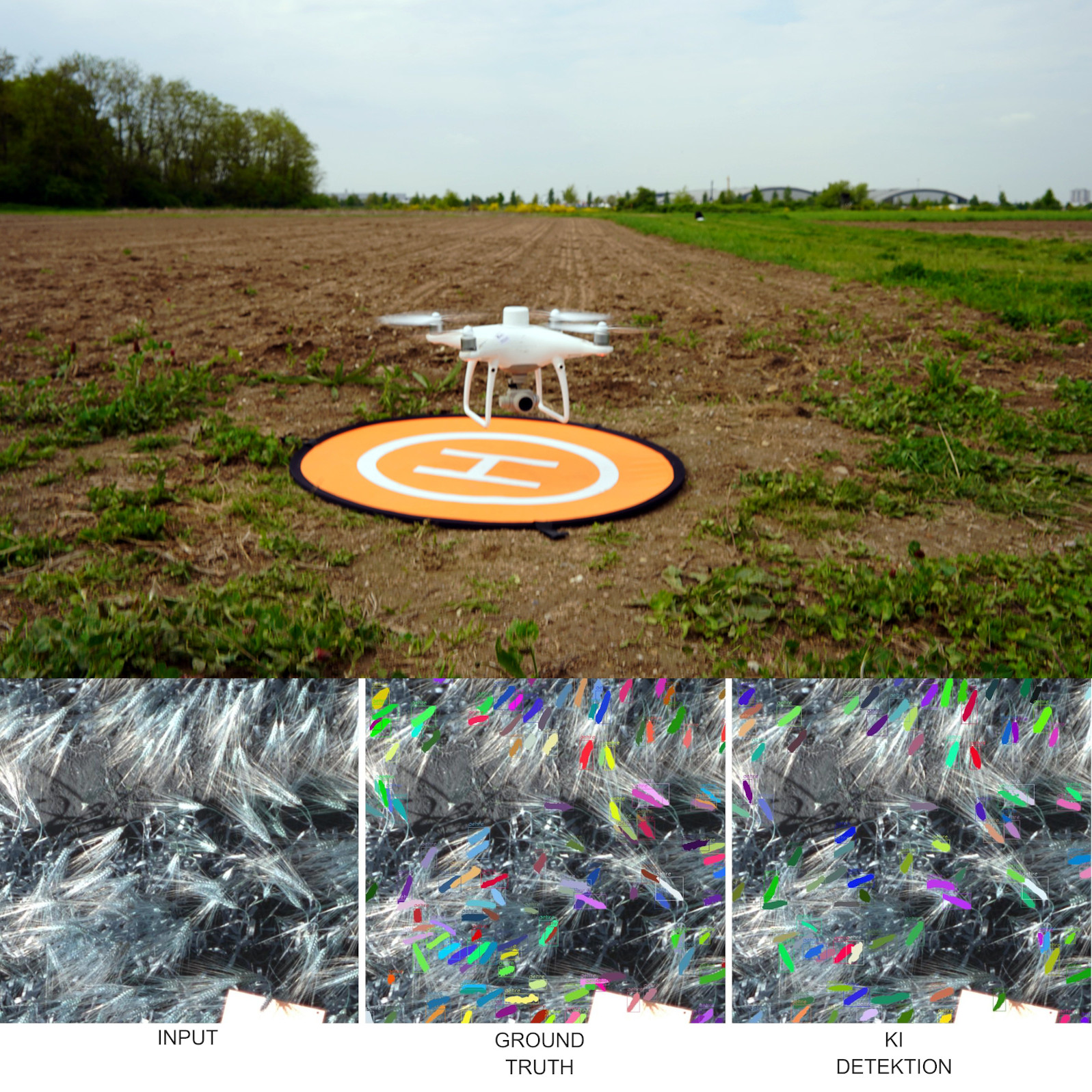
The tasks and responsibilities of the FZI were specifically in the field of AI. High-resolution data were recorded with an Unmanned Aerial System (UAS) for a plant-specific evaluation and AI methods were used to separate the crop plant from weeds and background before an automatic evaluation is carried out with further AI methods. At the end of the project, the goal was to create a holistic, easy-to-use solution that can automate the evaluation process.
The results from the BoniKI project were taken up for a follow-up project by an industrial partner.
More information
Contact person

Department Manager
Division: Intelligent Systems and Production Engineering
Headquarters Karlsruhe
Research focus
Applied Artificial Intelligence
AI from research to practice: We promote applied AI for business and small and medium-sized enterprises, integrating technology with law and ethics.
Robotics
We develop mobile systems and autonomous walking robots for use in space travel, industry, and public spaces. We put them to the test in the FZI Living Lab Service Robotics.
Funding notice:
The BoniKI project was funded by the Federal Ministry of Food and Agriculture (BMEL).
The project sponsor was the Federal Office for Agriculture and Food (BLE).