

Simply Better Data
FZI releases a dataset for research and commercial applications in autonomous driving
To conclude the jbDATA research project, the FZI is releasing processed traffic data for the development of automated driving functions. The FZI-AURA dataset is available as open data on Hugging Face and may be used by academia and industry, including for commercial purposes. At the same time, the project demonstrates how relevant traffic situations can be captured more precisely and how large volumes of data can be efficiently reduced.
High-quality datasets are an important foundation for training, testing, and further developing AI-based driving functions. However, in addition to the quality of the data, the licensing terms—which often prevent commercial use—are also crucial for their application.
With FZI-AURA, the FZI Research Center for Information Technology is releasing a high-quality open-data dataset that can be used both for scientific purposes and seamlessly for commercial development—for example, to develop perception models, test algorithms, or validate automated driving functions.
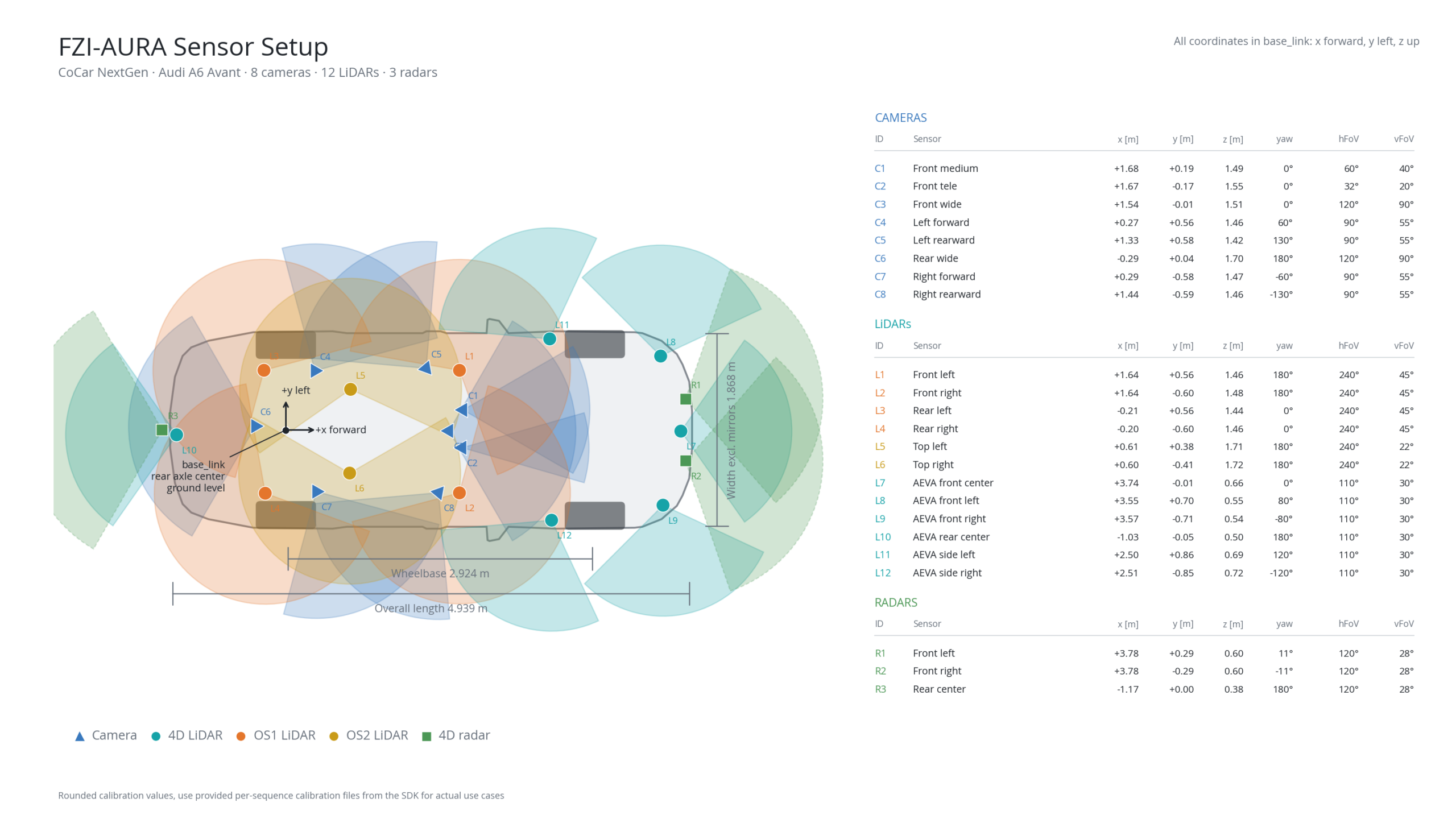
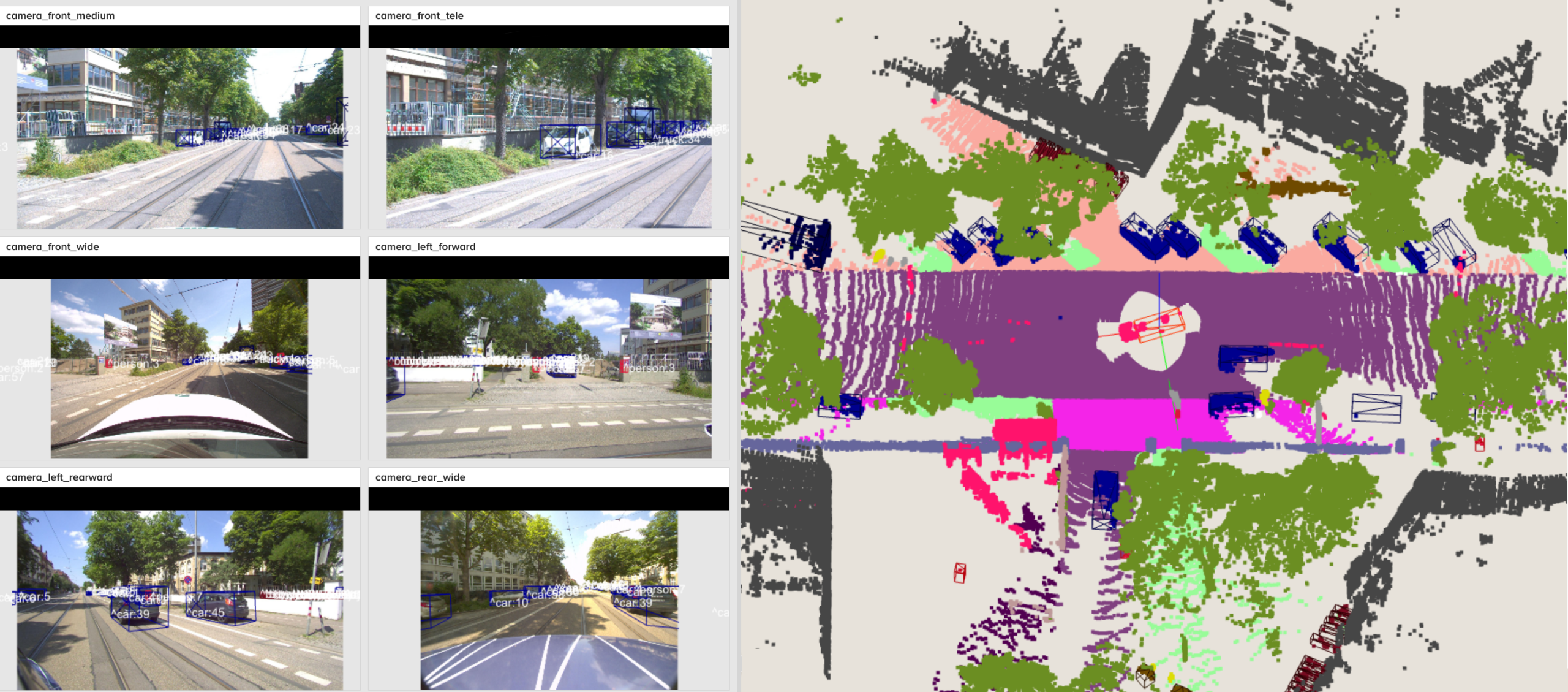
The dataset includes temporally synchronized camera, LiDAR, and radar data from real-world traffic situations. The raw data is gradually supplemented with annotations such as 3D bounding boxes and semantically segmented point clouds. To this end, the LiDAR point cloud is classified into categories such as “road,” “vehicle,” and “markings,” which identify objects in the sensor data and track them across multiple frames. This allows the data to be used directly for training and evaluating AI models.
Gathering targeted, relevant traffic data
The jbDATA project investigated how data collection vehicles can more effectively capture traffic situations that meaningfully supplement existing datasets. To this end, a smart data loop analyzes existing data, identifies gaps, and derives requirements for further data collection. This allows a vehicle’s data collection functions to be tailored to specific traffic situations or object classes.
This approach reduces storage and processing requirements while simultaneously increasing the information content of the collected data. Image areas relevant to data protection were processed prior to publication using anonymization methods developed at the FZI.
About jbDATA and jbDATAset

“Research data truly reveals its value when it can be used across multiple projects,” explains Dr. Ing. Philip Schörner, project manager at the FZI. “With FZI-AURA, we are providing a high-quality dataset that is not only openly accessible but, thanks to clear usage rights, may also be used in industrial applications. In doing so, we are laying an important foundation for further research and the transfer of knowledge into practice.”
In the jbDATA project, the FZI was involved in designing the data collection process, intelligently selecting relevant traffic scenarios, and preparing the data. The traffic data was collected using the FZI’s CoCarNextGen test platform. Anonymization methods developed as part of the FZI’s ANYMOS project were used to process image areas subject to data protection regulations.
About the FZI
The FZI Research Center for Information Technology, with headquarters in Karlsruhe and a branch office in Berlin, is a non-profit institution for information technology application research and technology transfer. It delivers the latest scientific findings in information technology to companies and public institutions and qualifies individuals for academic and business careers or the leap into self-employment. Supervised by professors from various faculties, the research groups at the FZI develop interdisciplinary concepts, software, hardware and system solutions for their clients and implement the solutions found as prototypes. The FZI House of Living Labs provides a unique research environment for application research. The FZI is an innovation partner of the Karlsruhe Institute of Technology (KIT) and strategic partner of the German Informatics Society (GI).