

1. Model Familiarity: Quantify how repeated route exposure alters driver attention and risk acceptance.
2. Generate Human-Like Control: Develop a Neurosymbolic-Diffusion planner that combines the natural fluidity of generative AI with verifiable symbolic safety constraints.
3. Validate in Mixed Traffic: Operationalise these models in closed-loop simulations where background agents exhibit realistic learning curves.
4. Define Regulatory Criteria: Establish an "Acceptance Threshold Matrix" to certify predictability and trust.
5. Demonstrate in Real-World: Validate the framework via shadow-mode integration in urban pilots.
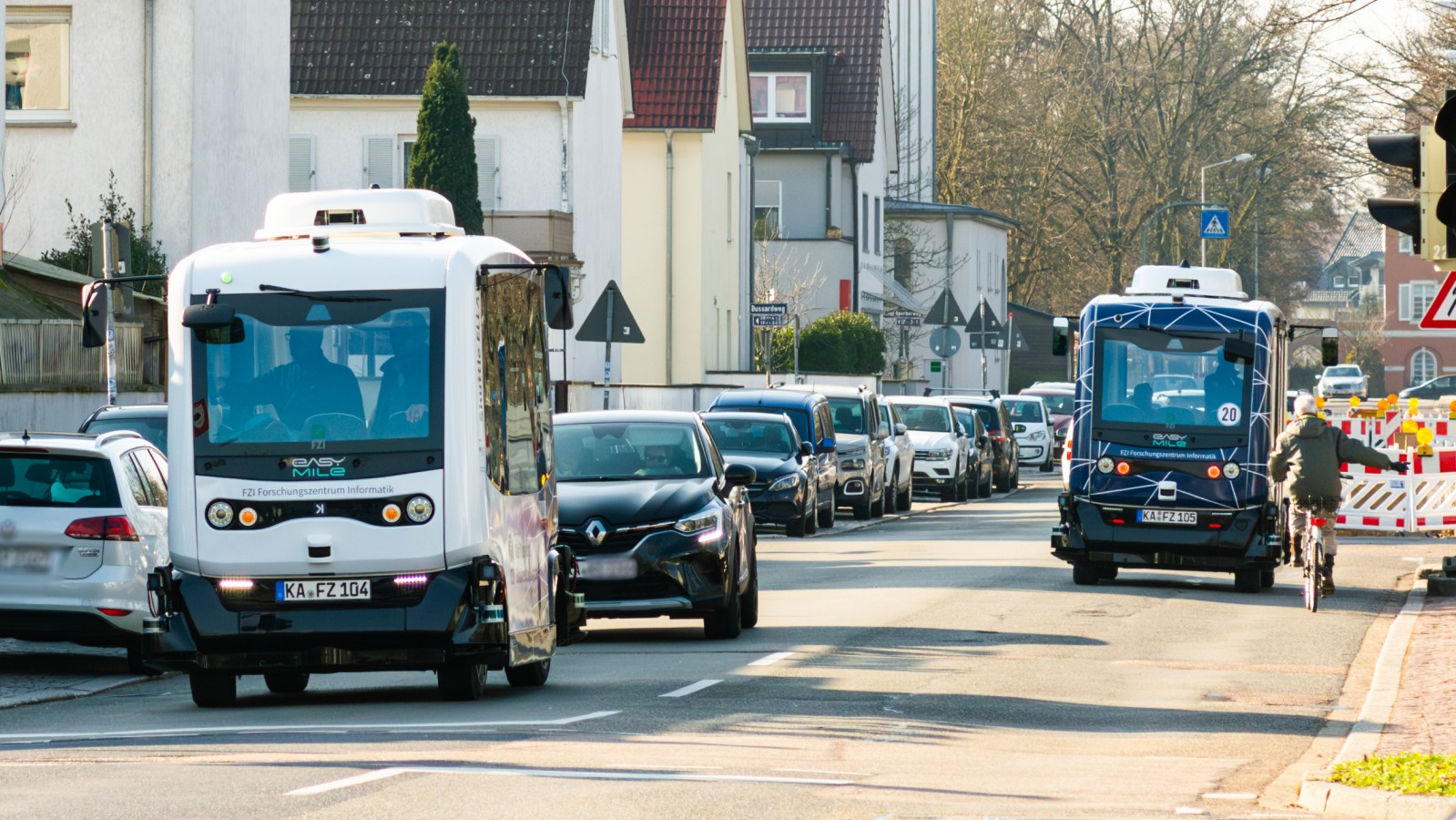
Building on results from i4Driving and BERTHA, HARMO treats familiarity as a dynamic latent variable. We generate a "Habituation Dataset" to calibrate HBMs, which are then integrated into a hybrid AI planning stack. This stack is validated using EU-CEM compliant scenarios, replacing static background traffic with "smart" agents. Finally, the system is benchmarked in real-world logistics and shuttle pilots, comparing HARMO’s behavioural predictions against live human traffic without altering vehicle control. By translating scientific models into "Safety Evidence Packs" for type approval, HARMO enables the design of "safe, human-like behaviour" that is predictable to other road users, supporting the trustworthy deployment of CCAM in Europe.

AI from research to practice: We promote applied AI for business and small and medium-sized enterprises, integrating technology with law and ethics.
Autonomous shuttles, intelligent logistics, and software-defined vehicles: We use IT to create the connected, safe, and sustainable mobility and logistics solutions of tomorrow.


- ENIDE Solutions
- International Road Transport Union
- Transport & Mobility Leuven
- Nord University
- Intelligent Systems for Mobility
- Foundation Cidaut
- University of Surrey
- SafeAD
- LOXO
- Trygg Trafikk
- Foundation CTAG
- ITS Norway